
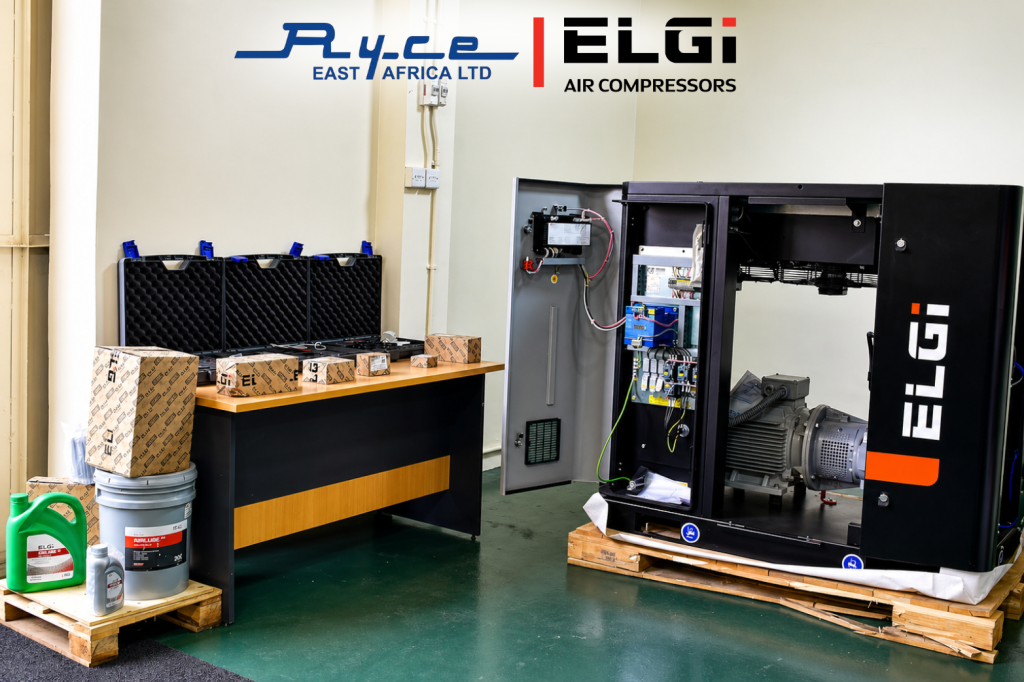
In a busy production facility, your air compressor is the quiet heartbeat of your entire operation. When an ELGi rotary screw or oil-free compressor is running optimally, it blends into the background, delivering reliable pneumatic power day in and day out.
However, because these machines are built to endure demanding environments, it is easy to mistake resilience for immortality. Ignoring minor changes in performance can turn a simple filter swap into a catastrophic failure.
Recognizing problems early keeps your team productive and protects your bottom line. These five clear signs indicate your ELGi compressor requires immediate aftersales support.
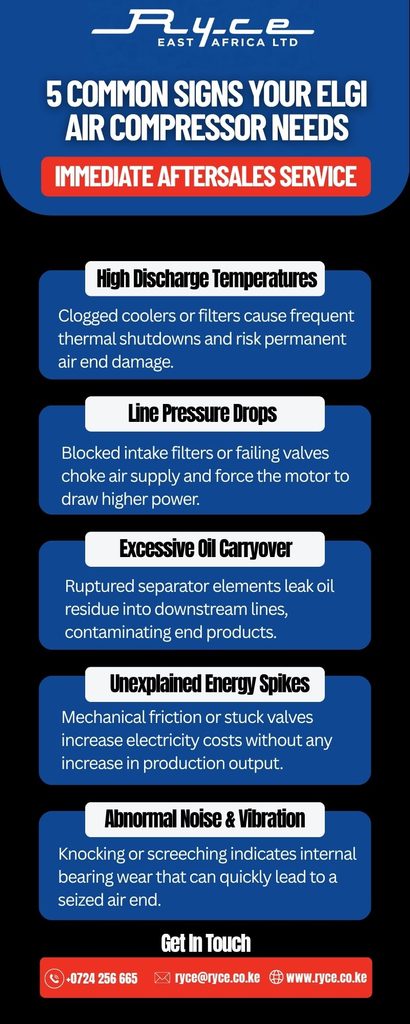
1. High Discharge Temperatures or Frequent Heat Trips
ELGi compressors are engineered with advanced cooling systems designed to handle high-ambient industrial temperatures. If your Neuron or AirAlert controller regularly flashes a “Warn Temperature” alert or initiates a protective thermal shutdown, do not ignore it.
Running consistently hot is usually a sign of a clogged oil cooler, a malfunctioning thermal valve, or a blocked oil filter element restricting flow to the air end. Pushing a compressor past its thermal limits degrades the lubricant rapidly and risks permanent damage to the precision-engineered air end.
2. Sudden, Unexplained Pressure Drops in the Line
If your production floor is complaining about a drop in pneumatic tool performance, or if your system is struggling to reach its set unload pressure, you have an efficiency leak.
While external distribution piping leaks are common, internal compressor issues are often the culprit. A heavily clogged intake air filter or a failing minimum pressure valve will choke the air supply.
Furthermore, if the differential pressure indicator for your oil separator element triggers an alert, it means the air has a hard time passing through the sump, forcing the motor to work harder and pull more electricity just to keep up.
3. Excessive Oil Carryover (Oil in Your Downstream Air)
Finding oil residue in your pneumatic lines, downstream filters, or end products is a critical red flag. In industries like food processing, pharmaceuticals, or high-end packaging, this completely compromises product safety.
In an oil-lubricated screw compressor, excessive oil carryover points directly to a ruptured, saturated, or aged oil separator element.
Alternatively, a malfunctioning minimum pressure valve can cause rapid velocity changes that pull oil out of the sump reservoir.
This requires an authorized service technician to inspect the internal seals and perform a precision separator replacement.
4. High Energy Bills Without a Production Increase
Air compressors are already among the largest consumers of power on your factory floor. ELGi units are globally celebrated for their energy efficiency, especially when equipped with Variable Speed Drive (VSD) technology. However, mechanical wear can rob them of this advantage over time.
If your monthly energy costs are creeping upward but your production volume remains the same, your compressor is losing efficiency.
This happens when:
- Conventional fixed-speed units experience unloader valve failures, remaining stuck in a power-heavy “loaded” cycle.
- Internal components face increased mechanical friction, causing the main motor to draw higher amperage to deliver the same volume of air.
5. Unusual Mechanical Noises or Increased Vibration
Every experienced plant operator knows the exact hum of their machinery. If your compressor suddenly starts producing erratic rattling, heavy knocking, or sharp screeching sounds, switch it off immediately.
ELGi’s proprietary air end technology relies on incredibly tight clearances between the twin rotors. Unusual knocking or high vibration levels are clear indicators of bearing wear or mechanical misalignment. Catching this early means replacing an affordable set of bearings during a standard service window; ignoring it can result in a completely seized air end.
Don’t Guess Your Air Compressor’s Health
Modern compressed air systems are sophisticated assets. Trying to patch internal valve faults or using generic third-party filters will only compromise the machine’s efficiency and invalidate your extended warranty coverage.
When your ELGi controller signals that maintenance is due, the safest and most cost-effective move is to let certified experts handle it.
Is your ELGi air compressor showing any of these warning signs?
Contact Ryce East Africa Limited today. Our factory-trained aftersales team will perform complete load diagnostic audits, use genuine ELGi replacement parts, and ensure your system continues to run at maximum efficiency.
Call us: +254 724 256 665 | Email us: ryce@ryce.co.ke | Visit: Kampala Road, Industrial Area, Nairobi.